
Project-based learning in practice
Children explore a topic in depth — through movement, creation, discussion and collaboration. Example: Our city — a walk to the bakery, building a neighbourhood model, mini exhibition for parents.
Three pillars of pedagogy plus three pillars of environment and relationships. Children explore the world in depth — through movement, creation, discussion and collaboration.
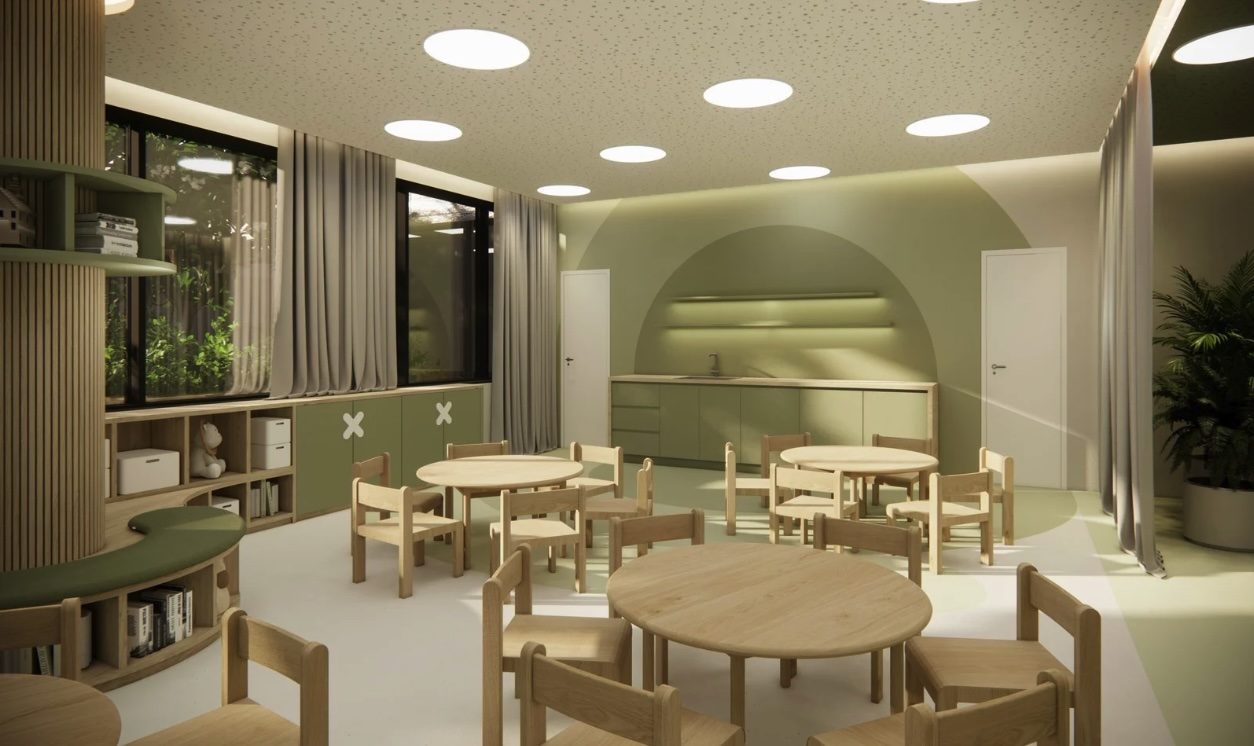
Three pillars of pedagogy plus three pillars of environment and relationships. Together they form a unique kindergarten.
Children explore a topic in depth — through movement, creation, discussion and collaboration. Example: Our city — a walk to the bakery, building a neighbourhood model, mini exhibition for parents.
Present in morning rituals, songs and games. Example: morning circle in Czech, snack in English — always a natural context, never forced.
Bee-Bots, Ozo-Bots and Cubetto — physical programmable toys. Hands-on, tied to projects. No passive content consumption.
A teacher and assistant every day. A small group — every child gets attention. Calm environment, space for all emotions.
Joint events, portfolios, classroom visits. Children know their future teachers and spaces long before starting 1st grade.
Twigsee app, regular photos and messages from the teacher, child portfolio, community events for the whole family.
This is what a project looks like in practice — from a question, through creation, to an exhibition for parents.
Children get to know their neighbourhood first-hand. Questions come naturally — and with them, the project’s theme.
What the children saw becomes a model of the neighbourhood. Movement, creation, discussion and collaboration — exactly what project-based learning means.
Children guide their parents through the model and show what they made. The project ends with sharing — and another chapter in the child’s portfolio.
An hour at our Balabenka campus — we’ll show you the kindergarten, how we teach, and talk about what you’re looking for.