Balabenka playground
A 3-minute walk from our door. A proper playground with climbing frames and space to run.
Show on the map ↗
Every day is different — and that’s by design. Routines give children safety, projects give them meaning.
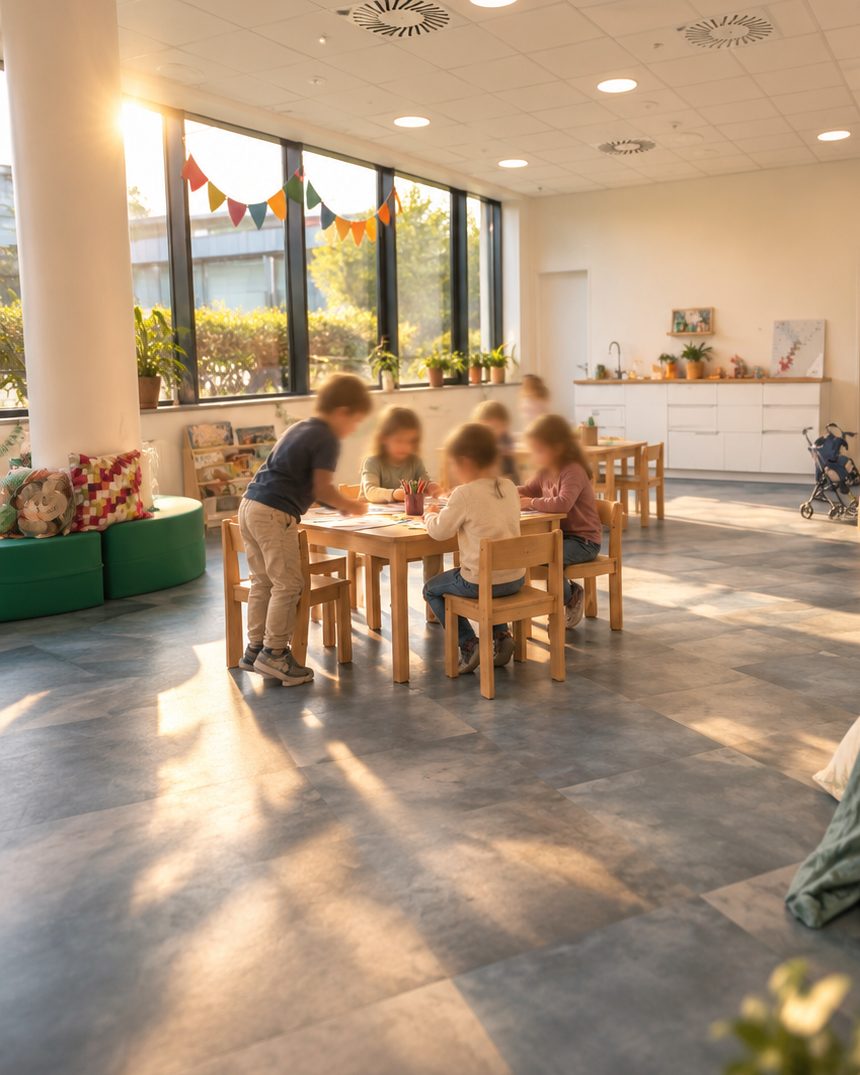
We are in an office building, so this is the first thing parents ask. The answer is simple: we go out every day.
A 3-minute walk from our door. A proper playground with climbing frames and space to run.
Show on the map ↗Going outside is a fixed part of the daily rhythm, not a reward or an extra. We dress for the weather and go.
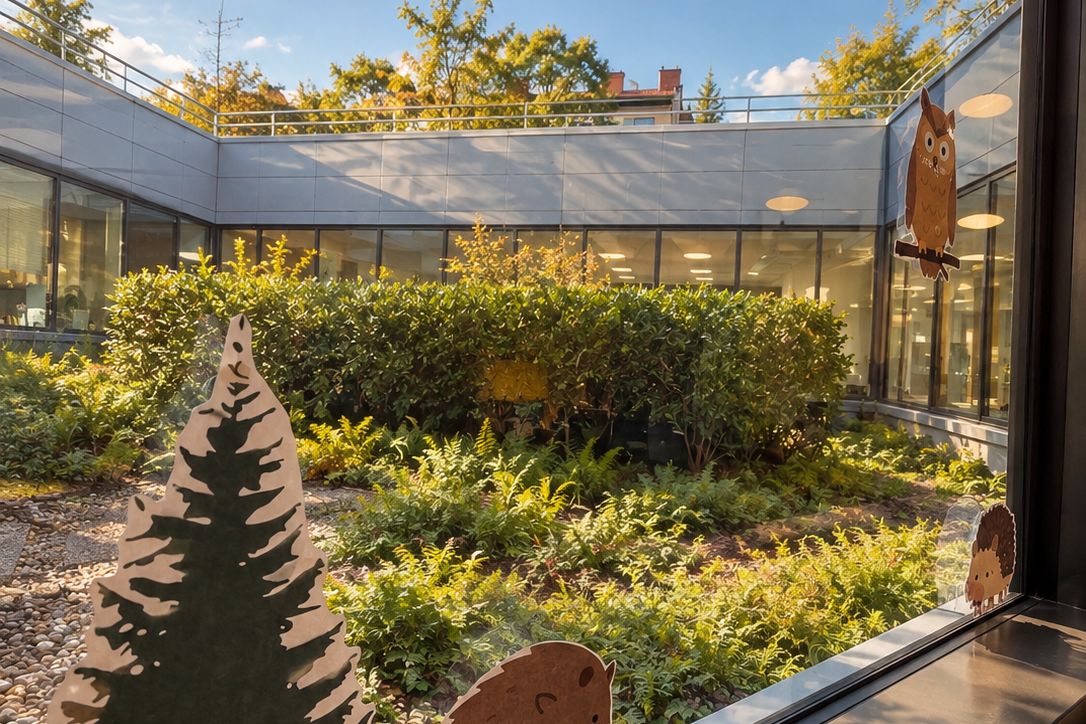
The building has its own outdoor terrace. We use it for play, for activities and for a change of air between blocks.
The daily rhythm gives children certainty, while leaving plenty of room for their own pace, spontaneous play and unexpected discoveries. The times are indicative — if something really catches the children’s attention, we don’t end it just because “it’s time to move on”.
Children arrive gradually and have time to settle calmly into the space and the group. They can choose free play, an activity centre, a book or a quiet task of their own. The teacher has room to welcome each child, meet the parent briefly and notice the mood a child arrives with.
The community circle helps children understand what lies ahead, share their experiences and sense the group. The morning also includes movement, a short exercise, rhythm or a language activity.
Eating together is also an opportunity for independence, conversation and ordinary social habits. Czech and English appear naturally, depending on the situation and the teacher present.
This is where the weekly FLOW rhythm shows most. One day children explore in activity centres, another they create, experiment, work on a project or prepare for an outing. This is not frontal teaching. Children work alone, in pairs or in a small group, and the teacher guides them with questions, materials and support.
Time outside isn’t just “getting some air”. Children observe nature, move, work with their surroundings, go on outings and connect what they’re exploring indoors with the real world.
Lunch together, hygiene and a window for collecting children on the shorter programme. The pace of the day gradually slows.
Some children sleep, others just need a quiet moment. We offer a story, relaxation, reading or quiet activities. What matters is that a child can recharge in the way that suits them.
Waking, hygiene, stretching, calm play and an afternoon snack. The transition is never rushed.
The afternoon isn’t waiting for parents. Children can return to an unfinished project, create, work in activity centres, be outside or follow their own play. The smaller group gives the teacher room for individual work, observation and support for a particular child.
The daily rhythm is an indicative frame. When something really catches the children’s attention, we give them time to finish it or take it further.
The shorter day ends at 12:30, the full-day programme at 17:00. See the rates under tuition.
Discovering · Creating · Investigating · Experiencing · Moving and sharing.
Children learn best when they can truly experience the world. So we head out regularly, meet interesting people and connect projects with real places, situations and experiences.
Trips into nature, ecology programmes, gardening, observing the natural world and themes of sustainability. We are gradually building partnerships with ecology centres so children can get to know nature in the field.
With the Quo Vadis riding centre in Hloubětín, children get to know the world of horses, learn to approach them with respect, notice their needs and gain experience they simply cannot have in a classroom.
With the Mezi námi project and the Senevida care home we bring children together with seniors. These meetings make room for talking, reading, making things and other activities where two generations can meet naturally.
Where possible we also want to offer swimming, skating and other physical activities that build coordination, independence and the joy of moving.
During the year we also want to offer children bigger shared experiences, such as an outdoor school and, depending on age and group, a winter stay or a ski course.
We follow each child’s progress continuously, keep their portfolio and share regularly with parents what they are moving forward in and what we want to focus on next.
The kindergarten is located at the FLOW campus in Balabenka — together with the elementary school, with its own separate operation for the youngest.
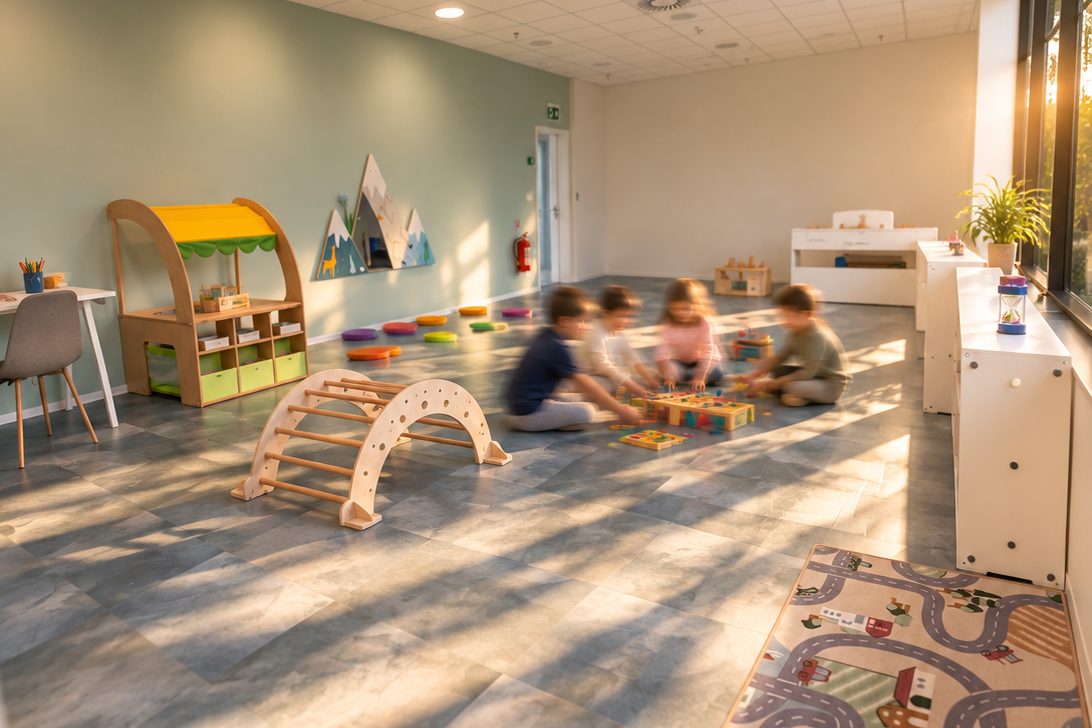
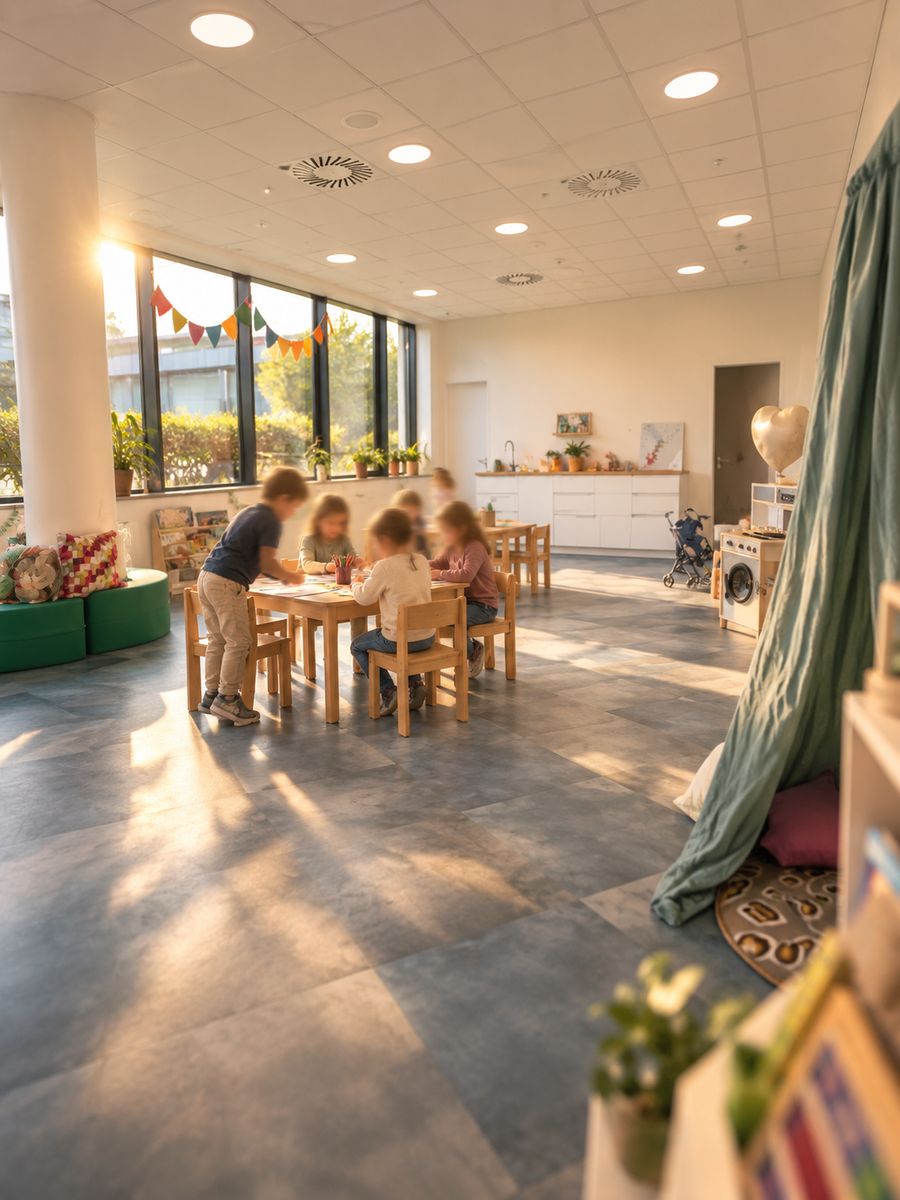
You’ll see them best in person — every Thursday at an Experience Morning.
Come on Thursday for an Experience Morning — walk through the kindergarten, meet the teachers and see an ordinary morning.
Founding Family Rate · until 31 January 2027
Our thank-you to the families building Little FLOW with us from the start.
Monthly prices, meals included. For families joining by 31 January 2027.
Options for 3 and 4 days a week and the sibling discount are in Tuition.